---
title: Vendor Central Shortage Claims vs Chargebacks - How to Investigate and Dispute Each One
description: Learn the correct way to investigate shortage claims and chargebacks on Vendor Central and minimise their impact to your profits.
image: https://www.wakecommerce.co.uk/hubfs/Blog%20Post%20Image%20(14).jpg
---
[](https://www.wakecommerce.co.uk)
- Services
- [Complete channel management for Amazon Vendor Central ](https://www.wakecommerce.co.uk/amazon-vendor-central-management)
- [Chargeback & Shortage Claim Recovery for Amazon Vendors ](https://www.wakecommerce.co.uk/profitguard-amazon-chargeback-recovery)
- [A creative agency within an Amazon agency ](https://www.wakecommerce.co.uk/amazon-listing-optimisation)
- [Full funnel Amazon Ads, DSP + AMC management ](https://www.wakecommerce.co.uk/amazon-ads-management)
- [Pricing](https://www.wakecommerce.co.uk/pricing)
- [Blog](https://www.wakecommerce.co.uk/blog)
[Contact Us](https://www.wakecommerce.co.uk/contact-us)
- Services
- [](https://www.wakecommerce.co.uk/amazon-vendor-central-management)
- [](https://www.wakecommerce.co.uk/profitguard-amazon-chargeback-recovery)
- [](https://www.wakecommerce.co.uk/amazon-listing-optimisation)
- [](https://www.wakecommerce.co.uk/amazon-ads-management)
- [Pricing](https://www.wakecommerce.co.uk/pricing)
- [Blog](https://www.wakecommerce.co.uk/blog)
- [Contact Us](https://www.wakecommerce.co.uk/contact-us)
## Enquiry Form
.jpg)
# Vendor Central Shortage Claims vs Chargebacks - How to Investigate and Dispute Each One
by **James Wakefield** 30 September 2026
[Amazon Vendor Central deductions](https://www.wakecommerce.co.uk/blog/the-ultimate-guide-to-amazon-deductions) are a thorn in the side of almost every brand operating on [Vendor Central](https://www.wakecommerce.co.uk/blog/amazon-vendor-central), chipping away a percentage of your revenue with every invoice you raise.
Many brands tend to treat these deductions as just an inevitable part of doing business through the Vendor model, but a lot of them are rooted in mistakes on Amazon’s side. If you investigate and dispute these charges with the right approach, you can not only soften the blow to your revenue, but develop a better system for avoiding deductions in the future.
In this guide, we’ll explain how to separate the two most common types of deductions, [shortage claims](https://www.wakecommerce.co.uk/blog/amazon-vendor-central-shortage-claims) and [chargebacks](https://www.wakecommerce.co.uk/blog/amazon-chargeback-guide-vendor-central), and the best way to investigate each one to maximise your chances of recovery.
## First, Define What You’re Looking At
Before you’re able to investigate a given deduction, you’ll need to make sure you have a clear definition of chargebacks and shortage claims. This sounds obvious, but many Vendors’ deduction workflows skip this step entirely, and end up paying for it later.
Here’s how to reliably separate the two categories.
.jpg?width=1200&height=670&name=Blog%20Post%20Image%20(15).jpg)
### Shortage Claims
A shortage claim is a discrepancy between what you say you shipped and invoiced, and what Amazon’s own records show.
Amazon raises a shortage claim whenever you invoice for more units than it says it received. The actual deduction is the difference between the two, priced at the invoiced cost.
Above all, this makes shortage claims a receipt, shipment, and invoice reconciliation issue. The variable is quantitative: how many units, from which shipment, against which PO? The evidence can be found in your purchase order, shipment, ASN, invoice and receipt records, and the answer ascertained by comparing these records against one another.
A good shortage claim investigation should be able to answer the following questions:
- How many units were shipped?
- How many units were invoiced?
- How many units did Amazon record as being received?
- Which shipment, PO, or ASN does the discrepancy relate to?
- Was the shipment received across several dates or locations?
It’s important to note that shortage claims don’t automatically mean that stock went missing. There are a range of reasons why Amazon might raise a shortage claim, including:
- An Amazon fulfilment centre miscounting stock at inbound.
- Label and barcode issues.
- Incorrect catalogue information, particularly when it comes to package hierarchy (e.g how case packs, inner packs, layers, and unit barcodes have been configured.)
- Incorrect data being communicated to Amazon through EDI automation.
- Invoicing errors, for example invoicing too early, or for items that really haven’t been received.
- Issues with ASN accuracy and ASNs missing from too many shipments.
Shortage claims also have a tendency to arrive late. Because invoices typically have 30, 60, or 90-day payment terms, weeks or months pass before Amazon flags a missing quantity. By the time a shortage claim is raised, the paper trail can be relatively old, making it fairly difficult for the warehouse team to figure out what actually happened on the shipping day.
### Chargebacks
Amazon Chargebacks generally relate to an alleged failure to meet Amazon’s requirements. Amazon’s position is that something in your process created cost, delay, or disruption on its end. As a result, it deducts the transaction amount, and may add a fee which can vary depending on the exact cause of the chargeback being raised.
The underlying issues that can give rise to chargebacks include:
- Packaging and labelling requirements.
- Shipping and compliance requirements.
- Routing and appointment requirements.
- Documentation and ASN-related requirements.
- Other operational standards.
Each type of chargeback comes with its own unique thresholds used to determine if a chargeback is initiated. For example, Amazon fulfilment centres set a maximum carton dimension of 63.5cm on any side, a weight limit of 23kg, and import documents within four days of departure.
When assessing chargebacks, the key thing to figure out isn’t whether or not Amazon received a product, but whether the shipment or process was compliant with the relevant requirement. A carton can arrive intact, be counted correctly, but still trigger a chargeback simply because the label wasn’t scannable or the ASN was wrong.
[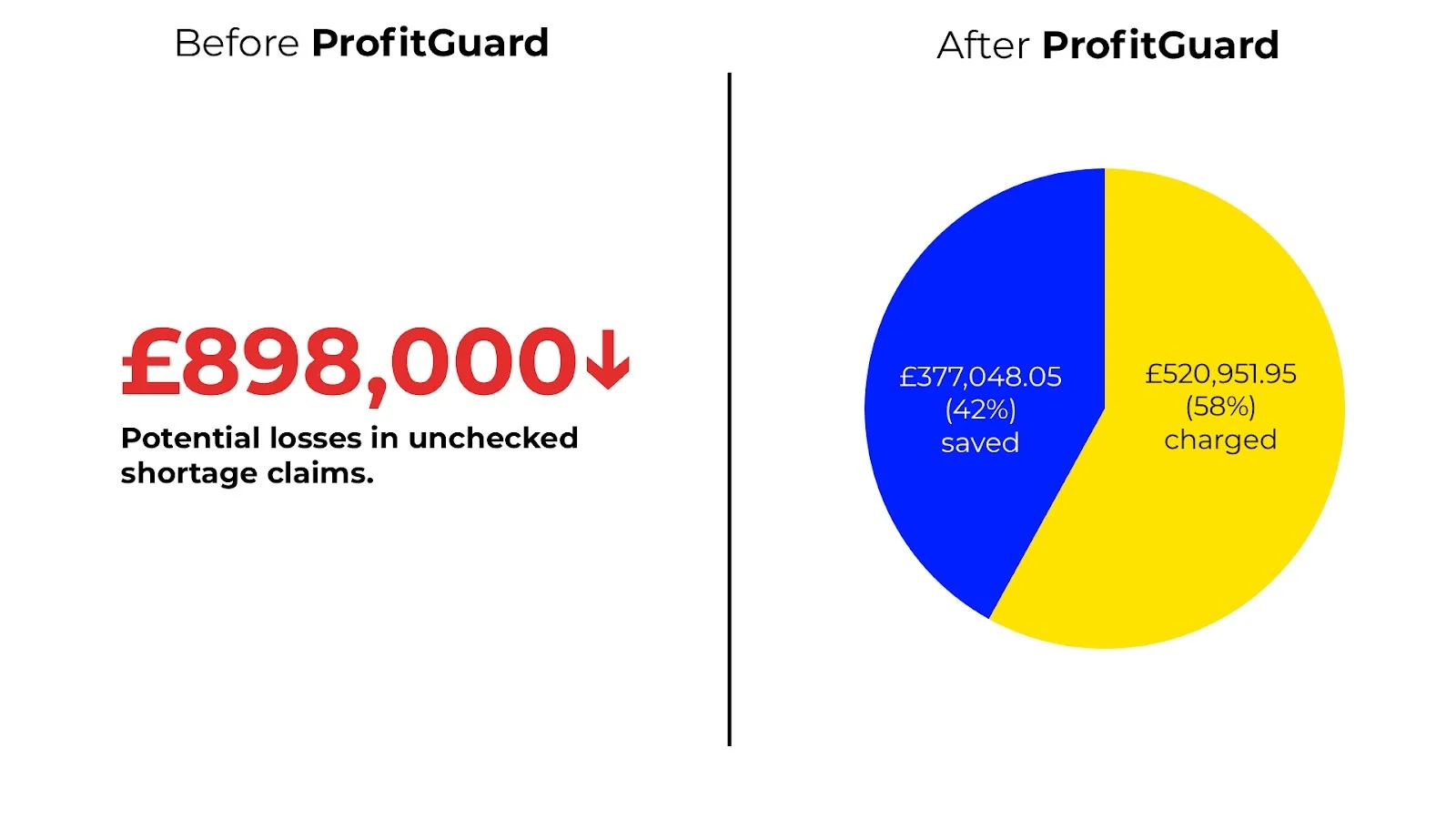](https://www.wakecommerce.co.uk/blog/how-we-saved-general-mills-377048.05-in-inaccurate-shortage-claims)
*Our deduction recovery work with General Mills revealed the importance of strong auditing and separating Shortage Claims from Chargebacks. Read the full case study* [*here*](https://www.wakecommerce.co.uk/blog/how-we-saved-general-mills-377048.05-in-inaccurate-shortage-claims)*.*
## How to Investigate a Shortage Claim
Shortage claim investigation first and foremost is a reconciliation exercise. The goal is to build up a chain of evidence from what you were asked to send, through what you sent and billed, to what Amazon actually says it got.
Here’s the process we use to reverse incorrect shortage claims step by step.
### Step 1 - Establish Expected Quantity
Begin with the documents, and clearly define what was supposed to happen. Pull the relevant PO and invoice records, and establish:
**Ordered quantity:** What Amazon asked for.
**Shipped quantity:** What actually left your warehouse, which may differ from what was ordered.
**Invoiced quantity:** What you billed Amazon for.
**Any approved adjustments or cancellations:** Anything that legitimately changed the state of the dispute after the PO was raised.
Confirming the details like this may sound trivial, but it isn’t. POs can be partially accepted, quantities can be revised, and shipments can be split. If you proceed with an incorrect “expected” number, then every comparison downstream may potentially be wrong too.
It’s not uncommon for a shortage that looks substantial to shrink considerably once a cancelled line or an accepted-quantity change is taken into account.
### Step 2 - Establish What Was Actually Shipped
The next step is to reconcile your shipment-level records.
Some key variables to review include:
- **Packing information:** Carton counts, unit counts per carton, and pallet configuration.
- **Shipment confirmations:** What your warehouse or 3PL confirmed as dispatched.
- **Bills of landing or carrier documentation:** What the carrier signed for.
- **ASN and shipping records:** What you told Amazon to expect.
An important practice here is to tie evidence to a specific shipment, and not to simply aggregate inventory records. “We had 10,000 units in stock and the stock level dropped by 2,400” isn’t the same as “these 2,400 units left on this date, on this pallet, under this ASN, against this PO.”
Vendors that can show precise and disciplined records like in the latter example will be in a much stronger position than one who’s simply relying on inventory movements.
### Step 3 - Compare Against Amazon’s Receipt Records
Next, identify Amazon’s recorded and received inventory, and classify it in two ways:
- Invoiced quantity vs received quantity.
- Shipped quantity vs received quantity.
These two comparisons can reveal different issues. If shipped quantity equals invoiced quantity but the received is lower, then the gap is between your dispatch and Amazon’s receipt. If shipped is lower than invoiced, then the problem is on your side, possibly with invoicing for items that weren’t set.
It’s also important to check for partial receipts, split receipts, timing differences, and other explanations for apparent shortages. A single ASN can correspond to several different visibility events if different parts of the shipment are being handled separately.
In other words, one shipment can legitimately produce several receipt records, at different times, and even at different locations. This means that a shortage that looks like a loss at first can turn out to be a receipt that simply hasn’t finished.
### Step 4 - Build the Reconciliation
Now you’re ready to put the pieces together. Present your investigation as a simple chain:
PO -\> Shipment -\> Invoice -\> Amazon Receipt -\> Deduction
Each link should be evidenced, with the deduction explainable by the difference between each click.
Clean reconciliation will reveal whether a deduction is:
**Valid:** The units genuinely weren’t delivered, and the deduction is correct. The next best step here is to investigate what went wrong and monitor for it in the future.
**Incorrect:** The units were delivered, and Amazon’s calculation or record is wrong. This is a classic case for a dispute.
**Premature:** Receipt is still in progress or incomplete. The discrepancy may resolve itself.
**Caused by a Timing or Record-Matching Issue:** Issues such as receipts logged against the wrong PO, a barcode that didn’t match a catalogue, or units received under a different ASIN or package configuration.
The premature category is worth extra attention, because timing can give you an opportunity. We suggest closely monitoring POs in the days and weeks after delivery, comparing Accepted Quantity with Received Quantity.
If you notice a discrepancy within a week of a PO being delivered, it’s worth waiting a few days to see if this gets resolved. If it persists, however, this is a strong sign that a shortage claim may be raised around the time that an invoice becomes due.
### Step 5 - Dispute with Evidence That Addresses the Discrepancy
If your reconciliation shows that a deduction is incorrect, your next step is to build a dispute that focuses on the specific quantity mismatch.
Simply attaching an invoice here is often insufficient, as this shows what you billed, not the stock that physically arrived. The evidence you cite should demonstrate the relationship between the shipment and the quantity that was claimed.
In practice, this usually means ASN data, proof of delivery and internal shipping records, all tied to the specific shipment.
It’s important to be precise about your dispute. Successful attempts challenge only the valid portions of a claim, and deliberately avoid disrupting overbilled invoices and duplicate payments, as well as anything Amazon has already credited under a separate invoice.
Unproductive disputes not only waste time, but can also damage credibility with the people at Amazon responsible for reviewing your cases. It can also mean you’ll have to recalculate the recoverable amount for each claim (the actual undelivered quantity, multiplied by the correct price) so that every dispute will reflect a precise and defensible figure.
**A hypothetical example:**
Imagine a vendor receives a shortage claim for 600 units of a product on a single PO. The team builds the chain:
**PO:** 2,400 units ordered, all accepted.
**Shipment:** 2,400 units left on two pallets under one ASN; the carrier's delivery record confirms both pallets were delivered.
**Invoice:** 2,400 units billed.
**Amazon receipt:** 1,800 units recorded.
**Deduction:** 600 units at the invoiced cost.
At first this might seem like a straightforward shortage. But a closer inspection of the figures will show the missing 600 units correspond exactly to a pallet whose cartons carried a different case-pack quantity in the catalogue than what was printed on the labels.
The units weren’t lost, just received under a configuration that didn’t match. That’s a record-matching shortage. This dispute calls for the ASN, proof of delivery for both pallets, as well as a note on the catalogue discrepancy.
The corrective action, meanwhile, is fixing the package hierarchy so that it doesn’t happen again.
If you make the mistake of treating this as a chargeback-style compliance problem, you’d have collected label photos, and missed the actual issue completely.
> **Feeling overwhelmed by Amazon deductions?** Our ProfitGuard service disputes invalid deductions on your behalf, and you only pay once funds are recovered.
>
>
>
> [](https://www.wakecommerce.co.uk/hs/cta/wi/redirect?encryptedPayload=AVxigLLakIxwBtkPIxZrSozzo%2FZnEY9atZZkvNOMUJjIqzETFcdfLXe%2FYIQu5vufjGN816TOwQP3dcplW4EpzKbV67UPnw54WuWsObp993Uu0%2FJozMkO66zxFpQbOu5Z1H8v2bk1MM9%2FT9aVbosiKfr1gSr3%2F7xP9YkBiehQBSwputfAOOcxuuqahgKFfwIr7PZUTtOu6rfECjh7Cy%2B%2BT%2B2QJMHKnoJzqH%2BQy3fzlVq%2BDKcHmkIS245XWDecoyW9&webInteractiveContentId=240929014996&portalId=26614020)
## How to Investigate a Chargeback
While shortage claim investigations are about pure numbers, a chargeback investigation is more centred on requirements and behaviour. You’ll need to establish what Amazon says you did wrong, the rule at the centre of the dispute, and what actually happened.
### Step 1 - Identify the Exact Reason a Chargeback Was Raised
Firstly, don’t fall into the trap of treating a “chargeback” as a single root cause.
There are 13 different types of chargebacks a Vendor can be hit with, and a chargeback for an overweight carton will have nothing to do with one for a late import booking, apart from the simple fact that money was deducted.
When you’re sitting down to investigate a chargeback, capture the key details of each one:
**Chargeback type:** The specific category that Amazon has assigned to the chargeback.
**Relevant shipment or order:** The PO, ASN, or shipment that triggered the chargeback.
**Date:** Both the date the chargeback was applied and the date of the event that triggered it.
**Claimed violation:** What Amazon says went wrong.
**Amount:** The deduction including any designated fee.
You can find a list of chargebacks in the Operational Performance view on Vendor Central, which also gives you information on the exact ASINs they’re being applied to.
Again, it’s important to bear in mind the importance of timing. Chargeback dispute windows are short, and we always advise filing your dispute within 30 days of a chargeback being raised. If a chargeback spends too long sitting unclassified in a queue, it can quickly and quietly expire, meaning you’ll no longer be able to challenge it.
### Step 2 - Identify the Applicable Requirement
Determine the Amazon requirement that was applied at the time, and what you were expected to do. Requirements are often being assessed and changed, and behaviours that were compliant a year ago may not be anymore.
Your next step is to establish the specific standard that caused the deduction: the dimension or weight limit, the booking deadline, ASN accuracy expectation, etc.
It’s important to avoid investigating based solely on the official description if you’re going to need additional documentation to understand the requirement. Deduction descriptions are short, and the crucial detail that decides a case is often hiding in the underlying standard.
At this stage, it’s also a good idea to check whether an exception applies. For example, oversized carton chargebacks can potentially be waived if the item you’re shipping is naturally larger than Amazon’s limits, provided that they have a relevant SIOC certification from Amazon.
### Step 3 - Gather Evidence of Compliance
Depending on the exact type of chargeback you’re investigating, the evidence you’ll need might include:
**Shipping records:** Dispatch dates, booking confirmations, and freight documentation.
**Labelling and packaging documentation:** Photos, packing specifications, label print records, or prep instructions.
**Carrier records:** Delivery confirmations, appointment history, and communications about rescheduling.
**Appointment / routing records:** The booking history for delivery slots.
**ASN and documentation records:** What you sent to Amazon and when.
**Internal fulfilment or warehouse records:** Quality control checks, pick and pack logs, and operator sign-offs.
The evidence you gather needs to prove compliance with the relevant requirement, and not merely that the goods were shipped. Proof of dispatch just shows that you sent something, it doesn’t show that the labels were readable, or that the booking was on time as per Amazon’s requirements.
Shipment records, packaging proof, or invoices that meet Amazon’s requirements are all examples of crucial pieces of evidence that could come into play when you’re proving compliance up to Amazon’s standards.
This stage is where proactive audits can pay off. Carrying out regular shipment and inventory audits, including checks that the correct number of units has been packed, and that everything is packed and barcoded according to Amazon policies, will create a paper trail that can support your disputes later.
### Step 4 - Determine Whether You’re Dealing With a Dispute or Process Problem
At this stage, you need to assess the chargeback using two separate questions:
1. **Was the chargeback incorrectly assessed?** I.e did Amazon apply the wrong rule, misread the shipment, or get certain facts wrong? If so, you’ll have grounds for a dispute, and your compliance evidence will make up part of your case.
2. **Did our process actually fail?** Was the carton overweight, was the label unscannable, or the booking late? If this is the case, the deduction raised by Amazon could be valid, and your next priority should be to understand why it happened.
Chargebacks are often applied correctly, and if you automatically dispute every chargeback that pops up in your dashboard, you may find yourself getting rejections without ever knowing out why.
A dispute you raise in and of itself might recover a deduction, but it won’t necessarily prevent the same issues from recurring. If a chargeback was overturned on a technicality, but the underlying label problem still persists, then the next shipment could produce the same result, and you might not be so lucky.
Winning individual disputes and fixing the root cause of the problem are two different projects, and only the second one reduces cost over time.
**A hypothetical example:**
Imagine a Vendor receives a carton compliance information chargeback. The team identifies the type, shipment, and date, then finds the relevant labelling requirement. Following an evidence review, the team finds that the label printer’s settings were changed on the day in question, which created faint barcodes on a batch of cartons.
Because this chargeback was correctly assessed, the correct response is internal: fixing the printer configuration, adding a scan check to the packaging station, and logging the corrective action.
Deductions that are hard to dispute, but highly preventable, tend to be ideal targets for process improvements.
## Making Deduction Investigations Fit for Purpose
Amazon Vendor Central deductions aren’t all the same, and approaching them as one generalised problem can make profit recovery much harder than it needs to be.
Shortage claims are fundamentally a reconciliation problem, whereas chargebacks are a compliance problem, but in both cases the overarching goal isn’t to scattergun as many deductions as possible.
Instead, work to identify the charges that are genuinely incorrect, build the necessary evidence around each one, and understand the operational issues that are causing repeat deductions.
For more support with maximising your profits on Vendor Central, be sure to [check out our other blog posts](https://www.wakecommerce.co.uk/blog), or get in touch for a free ProfitGuard audit to see how much you’re losing to chargebacks and shortages.
[](https://www.wakecommerce.co.uk/hs/cta/wi/redirect?encryptedPayload=AVxigLLJXWYxncLhHRkR0aDnDUATiY6gMiJeNp%2BTST5GZLAPIZon0pxHn%2FT2trp7CvrHydwRDjgTaVswreDEEdTZpytmN1%2FLt%2FbW1slpkHtaLqr9EiRuIfZT2UO8wJDZibCFO%2BOal%2BdplmwU5mGEQHjuPmYvaT5YabtC5rMSUQFPK3dmx8ZA9FxVORvCAdQRAiafM2YYQ4lOPWAlk%2BZE53l%2BI%2BEq92u0WpfVONGcDjfbx7W6JLFPW9qsfAetPncl&webInteractiveContentId=240929016022&portalId=26614020)
## How to Investigate Shortage Claims vs Chargebacks - FAQs
### What’s the difference between a shortage claim and a chargeback?
A shortage claim relates to a discrepancy between the quantity you shipped or invoiced and the quantity Amazon recorded as received. A chargeback relates to an alleged failure to meet an Amazon requirement, such as packaging, labelling, routing, booking, or documentation standards.
### How do I investigate an Amazon shortage claim?
Start by reconciling the PO, shipment, invoice, ASN and Amazon receipt records. Establish what was ordered, shipped and invoiced, then compare this against what Amazon recorded as received. This helps determine whether the deduction is valid, incorrect, premature, or caused by a timing or record-matching issue.
### What evidence do I need to dispute a shortage claim?
Useful evidence can include ASN data, proof of delivery, shipment confirmations, packing records and carrier documentation. The evidence should directly demonstrate that the disputed units were shipped and delivered, rather than simply showing that you invoiced Amazon.
### How do I investigate an Amazon chargeback?
First identify the exact chargeback type, shipment, date, claimed violation and amount. Then establish the Amazon requirement that applied at the time and gather evidence showing whether your shipment or process complied with it.
### How long do I have to dispute an Amazon chargeback?
Chargeback dispute windows can be short. The blog recommends reviewing and submitting disputes within 30 days of a chargeback being raised so that potentially recoverable deductions don't expire before they're investigated.
### Should I dispute every Amazon deduction?
No. A good recovery process distinguishes between incorrect deductions and valid deductions caused by genuine process failures. Disputing everything can lead to unnecessary rejections, while investigating the root cause of valid deductions can help prevent the same costs from recurring.

## Insights to help Grow Profit
Don't miss out on the latest strategies for growing your brand sustainably on Amazon. Subscribe now!
About the Author
James Wakefield is an Amazon Vendor expert and the founder of WAKE Commerce.
Having been involved in the internet since year dot (com), James established WAKE in 2015 to share his passion for data, branding and online retail strategy.
Since then, WAKE has helped leading consumer brands build a more profitable relationship with Amazon, navigate the many complexities of the platform and scale their business on the world’s biggest marketplace.
With a particular focus on Vendor Central, James consults with scaling businesses that want to make Amazon work for their brand.
## Related Blog Posts
April 3, 2025
###### [Amazon Profit Optimisation: Guide for Vendors in 2026](https://www.wakecommerce.co.uk/blog/amazon-profit-optimisation-the-ultimate-guide-for-vendors-in-2025)
[Continue reading](https://www.wakecommerce.co.uk/blog/amazon-profit-optimisation-the-ultimate-guide-for-vendors-in-2025)
July 11, 2024
###### [Amazon Vendor Central Shortage Claims - 2026 Ultimate Guide](https://www.wakecommerce.co.uk/blog/amazon-vendor-central-shortage-claims)
[Continue reading](https://www.wakecommerce.co.uk/blog/amazon-vendor-central-shortage-claims)
September 11, 2025
###### [Wake Commerce Amazon Profit Recovery Playbook 2025](https://www.wakecommerce.co.uk/blog/wake-commerce-amazon-profit-recovery-playbook-2025)
[Continue reading](https://www.wakecommerce.co.uk/blog/wake-commerce-amazon-profit-recovery-playbook-2025)
March 13, 2025
###### [The Ultimate Guide to Amazon Vendor Central Deductions](https://www.wakecommerce.co.uk/blog/the-ultimate-guide-to-amazon-deductions)
[Continue reading](https://www.wakecommerce.co.uk/blog/the-ultimate-guide-to-amazon-deductions)
March 2, 2026
###### [Brand Protection On Amazon: The Ultimate Guide for Vendors](https://www.wakecommerce.co.uk/blog/brand-protection-on-amazon)
[Continue reading](https://www.wakecommerce.co.uk/blog/brand-protection-on-amazon)
October 11, 2023
###### [Checklist: Getting Started with Amazon Vendor Central](https://www.wakecommerce.co.uk/blog/checklist-getting-started-with-amazon-vendor-central)
[Continue reading](https://www.wakecommerce.co.uk/blog/checklist-getting-started-with-amazon-vendor-central)
September 4, 2026
###### [Amazon Black Friday Marketing Strategy: Vendor Central Guide 2026](https://www.wakecommerce.co.uk/blog/amazon-black-friday-marketing-strategy-vendor-central-guide-2026)
[Continue reading](https://www.wakecommerce.co.uk/blog/amazon-black-friday-marketing-strategy-vendor-central-guide-2026)
March 6, 2025
###### [Amazon Born to Run: The Ultimate Guide for Amazon Vendors](https://www.wakecommerce.co.uk/blog/amazon-born-to-run-the-ultimate-guide)
[Continue reading](https://www.wakecommerce.co.uk/blog/amazon-born-to-run-the-ultimate-guide)
November 13, 2025
###### [What Is Amazon Rufus? A Complete Guide for Vendors](https://www.wakecommerce.co.uk/blog/what-is-amazon-rufus-a-complete-guide-for-vendors)
[Continue reading](https://www.wakecommerce.co.uk/blog/what-is-amazon-rufus-a-complete-guide-for-vendors)
October 11, 2023
###### [6 Challenges To Prepare For On Amazon Vendor Central in 2024](https://www.wakecommerce.co.uk/blog/6-challenges-to-prepare-for-on-amazon-vendor-central-in-2024)
[Continue reading](https://www.wakecommerce.co.uk/blog/6-challenges-to-prepare-for-on-amazon-vendor-central-in-2024)
[](https://www.wakecommerce.co.uk/)
- [Vendor+](https://www.wakecommerce.co.uk/amazon-vendor-central-management)
- [ProfitGuard](https://www.wakecommerce.co.uk/profitguard-amazon-chargeback-recovery)
- [ContentStudio](https://www.wakecommerce.co.uk/amazon-listing-optimisation)
- [ads+dsp](https://www.wakecommerce.co.uk/amazon-ads-management)
- [Blog](https://www.wakecommerce.co.uk/blog)
- [Contact us](https://www.wakecommerce.co.uk/contact-us)
020 3885 0777 | [hello@wakecommerce.co.uk](mailto:hello@wakecommerce.co.uk)




© Copyright 2026 - Wake Commerce Ltd
```json
{
"@context" : "https://schema.org",
"@type" : "BlogPosting",
"author" : {
"@type" : "Person",
"name" : "James Wakefield",
"url" : "https://www.wakecommerce.co.uk/blog/author/james-wakefield"
},
"dateModified" : "2026-09-30T15:00:55.246Z",
"datePublished" : "2026-09-30T15:00:55.000Z",
"headline" : "Vendor Central Shortage Claims vs Chargebacks - How to Investigate and Dispute Each One",
"image" : [ "https://www.wakecommerce.co.uk/hubfs/Blog%20Post%20Image%20(14).jpg" ],
"mainEntityOfPage" : {
"@id" : "https://www.wakecommerce.co.uk/blog/how-to-investigate-vendor-central-shortage-claims-vs-chargebacks",
"@type" : "WebPage"
},
"publisher" : {
"@type" : "Organization",
"logo" : {
"@type" : "ImageObject",
"url" : "https://www.wakecommerce.co.uk/hubfs/Wake_2023/Images/WAKE_Logo.png"
},
"name" : "Wake Commerce Ltd"
}
}
```
```json
{
"@context" : "https://schema.org",
"@id" : "#article",
"@type" : "Article",
"articleBody" : "Amazon Vendor Central deductions are a thorn in the side of almost every brand operating on Vendor Central, chipping away a percentage of your revenue with every invoice you raise.\n\nMany brands tend to treat these deductions as just an inevitable part of doing business through the Vendor model, but a lot of them are rooted in mistakes on Amazon’s side. If you investigate and dispute these charges with the right approach, you can not only soften the blow to your revenue, but develop a better system for avoiding deductions in the future.\n\nIn this guide, we’ll explain how to separate the two most common types of deductions, shortage claims and chargebacks, and the best way to investigate each one to maximise your chances of recovery.\n\nFirst, Define What You’re Looking At\n\nBefore you’re able to investigate a given deduction, you’ll need to make sure you have a clear definition of chargebacks and shortage claims. This sounds obvious, but many Vendors’ deduction workflows skip this step entirely, and end up paying for it later.\n\nHere’s how to reliably separate the two categories.\n\nShortage Claims\n\nA shortage claim is a discrepancy between what you say you shipped and invoiced, and what Amazon’s own records show.\n\nAmazon raises a shortage claim whenever you invoice for more units than it says it received. The actual deduction is the difference between the two, priced at the invoiced cost.\n\nAbove all, this makes shortage claims a receipt, shipment, and invoice reconciliation issue. The variable is quantitative: how many units, from which shipment, against which PO? The evidence can be found in your purchase order, shipment, ASN, invoice and receipt records, and the answer ascertained by comparing these records against one another.\n\nA good shortage claim investigation should be able to answer the following questions:\n\nHow many units were shipped?\n\nHow many units were invoiced?\n\nHow many units did Amazon record as being received?\n\nWhich shipment, PO, or ASN does the discrepancy relate to?\n\nWas the shipment received across several dates or locations?\n\nIt’s important to note that shortage claims don’t automatically mean that stock went missing. There are a range of reasons why Amazon might raise a shortage claim, including:\n\nAn Amazon fulfilment centre miscounting stock at inbound.\n\nLabel and barcode issues.\n\nIncorrect catalogue information, particularly when it comes to package hierarchy (e.g how case packs, inner packs, layers, and unit barcodes have been configured.)\n\nIncorrect data being communicated to Amazon through EDI automation.\n\nInvoicing errors, for example invoicing too early, or for items that really haven’t been received.\n\nIssues with ASN accuracy and ASNs missing from too many shipments.\n\nShortage claims also have a tendency to arrive late. Because invoices typically have 30, 60, or 90-day payment terms, weeks or months pass before Amazon flags a missing quantity. By the time a shortage claim is raised, the paper trail can be relatively old, making it fairly difficult for the warehouse team to figure out what actually happened on the shipping day.\n\nChargebacks\n\nAmazon Chargebacks generally relate to an alleged failure to meet Amazon’s requirements. Amazon’s position is that something in your process created cost, delay, or disruption on its end. As a result, it deducts the transaction amount, and may add a fee which can vary depending on the exact cause of the chargeback being raised.\n\nThe underlying issues that can give rise to chargebacks include:\n\nPackaging and labelling requirements.\n\nShipping and compliance requirements.\n\nRouting and appointment requirements.\n\nDocumentation and ASN-related requirements.\n\nOther operational standards.\n\nEach type of chargeback comes with its own unique thresholds used to determine if a chargeback is initiated. For example, Amazon fulfilment centres set a maximum carton dimension of 63.5cm on any side, a weight limit of 23kg, and import documents within four days of departure.\n\nWhen assessing chargebacks, the key thing to figure out isn’t whether or not Amazon received a product, but whether the shipment or process was compliant with the relevant requirement. A carton can arrive intact, be counted correctly, but still trigger a chargeback simply because the label wasn’t scannable or the ASN was wrong.\n\nOur deduction recovery work with General Mills revealed the importance of strong auditing and separating Shortage Claims from Chargebacks. Read the full case study here.\n\nHow to Investigate a Shortage Claim\n\nShortage claim investigation first and foremost is a reconciliation exercise. The goal is to build up a chain of evidence from what you were asked to send, through what you sent and billed, to what Amazon actually says it got.\n\nHere’s the process we use to reverse incorrect shortage claims step by step.\n\nStep 1 - Establish Expected Quantity\n\nBegin with the documents, and clearly define what was supposed to happen. Pull the relevant PO and invoice records, and establish:\n\nOrdered quantity: What Amazon asked for.\n\nShipped quantity: What actually left your warehouse, which may differ from what was ordered.\n\nInvoiced quantity: What you billed Amazon for.\n\nAny approved adjustments or cancellations: Anything that legitimately changed the state of the dispute after the PO was raised.\n\nConfirming the details like this may sound trivial, but it isn’t. POs can be partially accepted, quantities can be revised, and shipments can be split. If you proceed with an incorrect “expected” number, then every comparison downstream may potentially be wrong too.\n\nIt’s not uncommon for a shortage that looks substantial to shrink considerably once a cancelled line or an accepted-quantity change is taken into account.\n\nStep 2 - Establish What Was Actually Shipped\n\nThe next step is to reconcile your shipment-level records.\n\nSome key variables to review include:\n\nPacking information: Carton counts, unit counts per carton, and pallet configuration.\n\nShipment confirmations: What your warehouse or 3PL confirmed as dispatched.\n\nBills of landing or carrier documentation: What the carrier signed for.\n\nASN and shipping records: What you told Amazon to expect.\n\nAn important practice here is to tie evidence to a specific shipment, and not to simply aggregate inventory records. “We had 10,000 units in stock and the stock level dropped by 2,400” isn’t the same as “these 2,400 units left on this date, on this pallet, under this ASN, against this PO.”\n\nVendors that can show precise and disciplined records like in the latter example will be in a much stronger position than one who’s simply relying on inventory movements.\n\nStep 3 - Compare Against Amazon’s Receipt Records\n\nNext, identify Amazon’s recorded and received inventory, and classify it in two ways:\n\nInvoiced quantity vs received quantity.\n\nShipped quantity vs received quantity.\n\nThese two comparisons can reveal different issues. If shipped quantity equals invoiced quantity but the received is lower, then the gap is between your dispatch and Amazon’s receipt. If shipped is lower than invoiced, then the problem is on your side, possibly with invoicing for items that weren’t set.\n\nIt’s also important to check for partial receipts, split receipts, timing differences, and other explanations for apparent shortages. A single ASN can correspond to several different visibility events if different parts of the shipment are being handled separately.\n\nIn other words, one shipment can legitimately produce several receipt records, at different times, and even at different locations. This means that a shortage that looks like a loss at first can turn out to be a receipt that simply hasn’t finished.\n\nStep 4 - Build the Reconciliation\n\nNow you’re ready to put the pieces together. Present your investigation as a simple chain:\n\nPO -> Shipment -> Invoice -> Amazon Receipt -> Deduction\n\nEach link should be evidenced, with the deduction explainable by the difference between each click.\n\nClean reconciliation will reveal whether a deduction is:\n\nValid: The units genuinely weren’t delivered, and the deduction is correct. The next best step here is to investigate what went wrong and monitor for it in the future.\n\nIncorrect: The units were delivered, and Amazon’s calculation or record is wrong. This is a classic case for a dispute.\n\nPremature: Receipt is still in progress or incomplete. The discrepancy may resolve itself.\n\nCaused by a Timing or Record-Matching Issue: Issues such as receipts logged against the wrong PO, a barcode that didn’t match a catalogue, or units received under a different ASIN or package configuration.\n\nThe premature category is worth extra attention, because timing can give you an opportunity. We suggest closely monitoring POs in the days and weeks after delivery, comparing Accepted Quantity with Received Quantity.\n\nIf you notice a discrepancy within a week of a PO being delivered, it’s worth waiting a few days to see if this gets resolved. If it persists, however, this is a strong sign that a shortage claim may be raised around the time that an invoice becomes due.\n\nStep 5 - Dispute with Evidence That Addresses the Discrepancy\n\nIf your reconciliation shows that a deduction is incorrect, your next step is to build a dispute that focuses on the specific quantity mismatch.\n\nSimply attaching an invoice here is often insufficient, as this shows what you billed, not the stock that physically arrived. The evidence you cite should demonstrate the relationship between the shipment and the quantity that was claimed.\n\nIn practice, this usually means ASN data, proof of delivery and internal shipping records, all tied to the specific shipment.\n\nIt’s important to be precise about your dispute. Successful attempts challenge only the valid portions of a claim, and deliberately avoid disrupting overbilled invoices and duplicate payments, as well as anything Amazon has already credited under a separate invoice.\n\nUnproductive disputes not only waste time, but can also damage credibility with the people at Amazon responsible for reviewing your cases. It can also mean you’ll have to recalculate the recoverable amount for each claim (the actual undelivered quantity, multiplied by the correct price) so that every dispute will reflect a precise and defensible figure.\n\nA hypothetical example:\n\nImagine a vendor receives a shortage claim for 600 units of a product on a single PO. The team builds the chain:\n\nPO: 2,400 units ordered, all accepted.\n\nShipment: 2,400 units left on two pallets under one ASN; the carrier's delivery record confirms both pallets were delivered.\n\nInvoice: 2,400 units billed.\n\nAmazon receipt: 1,800 units recorded.\n\nDeduction: 600 units at the invoiced cost.\n\nAt first this might seem like a straightforward shortage. But a closer inspection of the figures will show the missing 600 units correspond exactly to a pallet whose cartons carried a different case-pack quantity in the catalogue than what was printed on the labels.\n\nThe units weren’t lost, just received under a configuration that didn’t match. That’s a record-matching shortage. This dispute calls for the ASN, proof of delivery for both pallets, as well as a note on the catalogue discrepancy.\n\nThe corrective action, meanwhile, is fixing the package hierarchy so that it doesn’t happen again.\n\nIf you make the mistake of treating this as a chargeback-style compliance problem, you’d have collected label photos, and missed the actual issue completely.\n\nFeeling overwhelmed by Amazon deductions? Our ProfitGuard service disputes invalid deductions on your behalf, and you only pay once funds are recovered.\n\nHow to Investigate a Chargeback\n\nWhile shortage claim investigations are about pure numbers, a chargeback investigation is more centred on requirements and behaviour. You’ll need to establish what Amazon says you did wrong, the rule at the centre of the dispute, and what actually happened.\n\nStep 1 - Identify the Exact Reason a Chargeback Was Raised\n\nFirstly, don’t fall into the trap of treating a “chargeback” as a single root cause.\n\nThere are 13 different types of chargebacks a Vendor can be hit with, and a chargeback for an overweight carton will have nothing to do with one for a late import booking, apart from the simple fact that money was deducted.\n\nWhen you’re sitting down to investigate a chargeback, capture the key details of each one:\n\nChargeback type: The specific category that Amazon has assigned to the chargeback.\n\nRelevant shipment or order: The PO, ASN, or shipment that triggered the chargeback.\n\nDate: Both the date the chargeback was applied and the date of the event that triggered it.\n\nClaimed violation: What Amazon says went wrong.\n\nAmount: The deduction including any designated fee.\n\nYou can find a list of chargebacks in the Operational Performance view on Vendor Central, which also gives you information on the exact ASINs they’re being applied to.\n\nAgain, it’s important to bear in mind the importance of timing. Chargeback dispute windows are short, and we always advise filing your dispute within 30 days of a chargeback being raised. If a chargeback spends too long sitting unclassified in a queue, it can quickly and quietly expire, meaning you’ll no longer be able to challenge it.\n\nStep 2 - Identify the Applicable Requirement\n\nDetermine the Amazon requirement that was applied at the time, and what you were expected to do. Requirements are often being assessed and changed, and behaviours that were compliant a year ago may not be anymore.\n\nYour next step is to establish the specific standard that caused the deduction: the dimension or weight limit, the booking deadline, ASN accuracy expectation, etc.\n\nIt’s important to avoid investigating based solely on the official description if you’re going to need additional documentation to understand the requirement. Deduction descriptions are short, and the crucial detail that decides a case is often hiding in the underlying standard.\n\nAt this stage, it’s also a good idea to check whether an exception applies. For example, oversized carton chargebacks can potentially be waived if the item you’re shipping is naturally larger than Amazon’s limits, provided that they have a relevant SIOC certification from Amazon.\n\nStep 3 - Gather Evidence of Compliance\n\nDepending on the exact type of chargeback you’re investigating, the evidence you’ll need might include:\n\nShipping records: Dispatch dates, booking confirmations, and freight documentation.\n\nLabelling and packaging documentation: Photos, packing specifications, label print records, or prep instructions.\n\nCarrier records: Delivery confirmations, appointment history, and communications about rescheduling.\n\nAppointment / routing records: The booking history for delivery slots.\n\nASN and documentation records: What you sent to Amazon and when.\n\nInternal fulfilment or warehouse records: Quality control checks, pick and pack logs, and operator sign-offs.\n\nThe evidence you gather needs to prove compliance with the relevant requirement, and not merely that the goods were shipped. Proof of dispatch just shows that you sent something, it doesn’t show that the labels were readable, or that the booking was on time as per Amazon’s requirements.\n\nShipment records, packaging proof, or invoices that meet Amazon’s requirements are all examples of crucial pieces of evidence that could come into play when you’re proving compliance up to Amazon’s standards.\n\nThis stage is where proactive audits can pay off. Carrying out regular shipment and inventory audits, including checks that the correct number of units has been packed, and that everything is packed and barcoded according to Amazon policies, will create a paper trail that can support your disputes later.\n\nStep 4 - Determine Whether You’re Dealing With a Dispute or Process Problem\n\nAt this stage, you need to assess the chargeback using two separate questions:\n\nWas the chargeback incorrectly assessed? I.e did Amazon apply the wrong rule, misread the shipment, or get certain facts wrong? If so, you’ll have grounds for a dispute, and your compliance evidence will make up part of your case.\n\nDid our process actually fail? Was the carton overweight, was the label unscannable, or the booking late? If this is the case, the deduction raised by Amazon could be valid, and your next priority should be to understand why it happened.\n\nChargebacks are often applied correctly, and if you automatically dispute every chargeback that pops up in your dashboard, you may find yourself getting rejections without ever knowing out why.\n\nA dispute you raise in and of itself might recover a deduction, but it won’t necessarily prevent the same issues from recurring. If a chargeback was overturned on a technicality, but the underlying label problem still persists, then the next shipment could produce the same result, and you might not be so lucky.\n\nWinning individual disputes and fixing the root cause of the problem are two different projects, and only the second one reduces cost over time.\n\nA hypothetical example:\n\nImagine a Vendor receives a carton compliance information chargeback. The team identifies the type, shipment, and date, then finds the relevant labelling requirement. Following an evidence review, the team finds that the label printer’s settings were changed on the day in question, which created faint barcodes on a batch of cartons.\n\nBecause this chargeback was correctly assessed, the correct response is internal: fixing the printer configuration, adding a scan check to the packaging station, and logging the corrective action.\n\nDeductions that are hard to dispute, but highly preventable, tend to be ideal targets for process improvements.\n\nMaking Deduction Investigations Fit for Purpose\n\nAmazon Vendor Central deductions aren’t all the same, and approaching them as one generalised problem can make profit recovery much harder than it needs to be.\n\nShortage claims are fundamentally a reconciliation problem, whereas chargebacks are a compliance problem, but in both cases the overarching goal isn’t to scattergun as many deductions as possible.\n\nInstead, work to identify the charges that are genuinely incorrect, build the necessary evidence around each one, and understand the operational issues that are causing repeat deductions.\n\nFor more support with maximising your profits on Vendor Central, be sure to check out our other blog posts, or get in touch for a free ProfitGuard audit to see how much you’re losing to chargebacks and shortages.",
"author" : {
"@id" : "#james-wakefield",
"@type" : "Person",
"description" : "James Wakefield is an Amazon Vendor expert and the founder of WAKE Commerce. Having been involved in the internet since year dot (com), James established WAKE in 2015 to share his passion for data, branding and online retail strategy. Since then, WAKE has helped leading consumer brands build a more profitable relationship with Amazon, navigate the many complexities of the platform and scale their business on the world’s biggest marketplace. With a particular focus on Vendor Central, James consults with scaling businesses that want to make Amazon work for their brand.",
"name" : "James Wakefield",
"sameAs" : [ "https://www.linkedin.com/in/james-wakefield-amazon-consultant" ]
},
"description" : "Learn the correct way to investigate shortage claims and chargebacks on Vendor Central.",
"headline" : "Vendor Central Shortage Claims vs Chargebacks - How to Investigate and Dispute Each One",
"mainEntity" : {
"@id" : "#faq"
},
"subjectOf" : [ {
"@id" : "#shortage-howto"
}, {
"@id" : "#chargeback-howto"
}, {
"@id" : "#faq"
} ]
}
```
```json
{
"@context" : "https://schema.org",
"@id" : "#shortage-howto",
"@type" : "HowTo",
"description" : "A step-by-step process for investigating and disputing Amazon Vendor Central shortage claims.",
"name" : "How to Investigate a Shortage Claim",
"step" : [ {
"@type" : "HowToStep",
"name" : "Establish Expected Quantity",
"text" : "Begin with the relevant PO and invoice records and establish the ordered quantity, shipped quantity, invoiced quantity, and any approved adjustments or cancellations. Confirming these details establishes the correct expected quantity before comparing downstream records."
}, {
"@type" : "HowToStep",
"name" : "Establish What Was Actually Shipped",
"text" : "Reconcile shipment-level records including packing information, shipment confirmations, bills of lading or carrier documentation, ASN data and shipping records. Tie evidence to the specific shipment rather than relying only on aggregate inventory movements."
}, {
"@type" : "HowToStep",
"name" : "Compare Against Amazon’s Receipt Records",
"text" : "Identify Amazon’s recorded and received inventory and compare invoiced quantity against received quantity and shipped quantity against received quantity. Check for partial receipts, split receipts, timing differences and other explanations for apparent shortages."
}, {
"@type" : "HowToStep",
"name" : "Build the Reconciliation",
"text" : "Present the investigation as a chain from PO to shipment to invoice to Amazon receipt to deduction. Use evidence at each stage to determine whether the deduction is valid, incorrect, premature, or caused by a timing or record-matching issue."
}, {
"@type" : "HowToStep",
"name" : "Dispute with Evidence That Addresses the Discrepancy",
"text" : "If the reconciliation shows that a deduction is incorrect, build a dispute around the specific quantity mismatch. Use evidence such as ASN data, proof of delivery and internal shipping records tied to the specific shipment."
} ]
}
```
```json
{
"@context" : "https://schema.org",
"@id" : "#chargeback-howto",
"@type" : "HowTo",
"description" : "A step-by-step process for investigating Amazon Vendor Central chargebacks and determining whether they should be disputed or addressed through process improvements.",
"name" : "How to Investigate a Chargeback",
"step" : [ {
"@type" : "HowToStep",
"name" : "Identify the Exact Reason a Chargeback Was Raised",
"text" : "Identify the chargeback type, relevant shipment or order, date, claimed violation and amount. Chargebacks should be investigated according to their specific category and the requirement Amazon says was not met."
}, {
"@type" : "HowToStep",
"name" : "Identify the Applicable Requirement",
"text" : "Determine the Amazon requirement that applied at the relevant time, including the specific standard, dimension or weight limit, booking deadline, ASN accuracy expectation or other applicable requirement. Check whether an exception applies."
}, {
"@type" : "HowToStep",
"name" : "Gather Evidence of Compliance",
"text" : "Gather evidence appropriate to the chargeback type, such as shipping records, labelling and packaging documentation, carrier records, appointment or routing records, ASN and documentation records, and internal fulfilment or warehouse records."
}, {
"@type" : "HowToStep",
"name" : "Determine Whether You’re Dealing With a Dispute or Process Problem",
"text" : "Assess whether Amazon incorrectly applied the relevant rule or whether the underlying process actually failed. If the chargeback was incorrectly assessed, compliance evidence can support a dispute. If the process failed, investigate the root cause and implement corrective action."
} ]
}
```
```json
{
"@context" : "https://schema.org",
"@id" : "#faq",
"@type" : "FAQPage",
"mainEntity" : [ {
"@type" : "Question",
"acceptedAnswer" : {
"@type" : "Answer",
"text" : "A shortage claim relates to a discrepancy between the quantity you shipped or invoiced and the quantity Amazon recorded as received. A chargeback relates to an alleged failure to meet an Amazon requirement, such as packaging, labelling, routing, booking, or documentation standards."
},
"name" : "What’s the difference between a shortage claim and a chargeback?"
}, {
"@type" : "Question",
"acceptedAnswer" : {
"@type" : "Answer",
"text" : "Start by reconciling the PO, shipment, invoice, ASN and Amazon receipt records. Establish what was ordered, shipped and invoiced, then compare this against what Amazon recorded as received. This helps determine whether the deduction is valid, incorrect, premature, or caused by a timing or record-matching issue."
},
"name" : "How do I investigate an Amazon shortage claim?"
}, {
"@type" : "Question",
"acceptedAnswer" : {
"@type" : "Answer",
"text" : "Useful evidence can include ASN data, proof of delivery, shipment confirmations, packing records and carrier documentation. The evidence should directly demonstrate that the disputed units were shipped and delivered, rather than simply showing that you invoiced Amazon."
},
"name" : "What evidence do I need to dispute a shortage claim?"
}, {
"@type" : "Question",
"acceptedAnswer" : {
"@type" : "Answer",
"text" : "First identify the exact chargeback type, shipment, date, claimed violation and amount. Then establish the Amazon requirement that applied at the time and gather evidence showing whether your shipment or process complied with it."
},
"name" : "How do I investigate an Amazon chargeback?"
}, {
"@type" : "Question",
"acceptedAnswer" : {
"@type" : "Answer",
"text" : "Chargeback dispute windows can be short. The blog recommends reviewing and submitting disputes within 30 days of a chargeback being raised so that potentially recoverable deductions don't expire before they're investigated."
},
"name" : "How long do I have to dispute an Amazon chargeback?"
}, {
"@type" : "Question",
"acceptedAnswer" : {
"@type" : "Answer",
"text" : "No. A good recovery process distinguishes between incorrect deductions and valid deductions caused by genuine process failures. Disputing everything can lead to unnecessary rejections, while investigating the root cause of valid deductions can help prevent the same costs from recurring."
},
"name" : "Should I dispute every Amazon deduction?"
} ]
}
```